1. Lock the year-end date first
Year-end starts with the cut-off date, not with the tax return. If the date is fuzzy, the whole checklist gets fuzzy with it.
For most sole props, CRA generally pushes you back to the calendar year and December 31. But a corporation can choose its own year-end, as long as the tax year does not run longer than 53 weeks.
Owners should write this date everywhere: the bookkeeping file, the internal checklist, and the accountant handoff note. Our bookkeeping guide is the big-picture version, but year-end starts with the date and nowhere else.
2. Reconcile every account through year-end
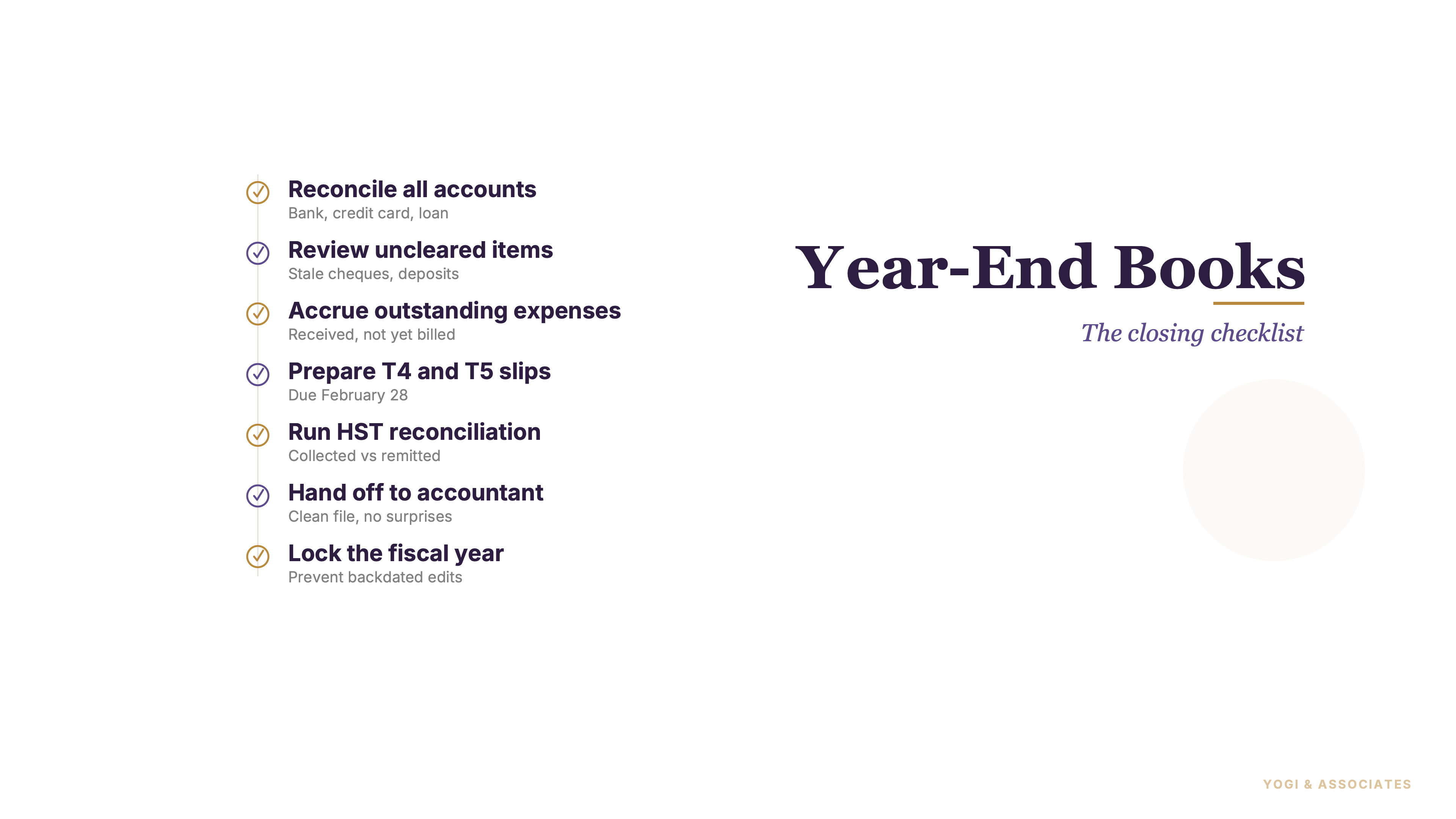
This is the non-negotiable step. Every bank, credit card, loan, and clearing account has to reconcile right through the fiscal year-end.
But year-end reconciliation is not just about cash. owners also need to review A/R, A/P, payroll balances, and shareholder or owner accounts at the same time.
Year-end without clean reconciliations is just organized guessing. Our monthly bookkeeping checklist matters here because good year-end work is usually just twelve months of decent month-end work stacked together.
3. Post the year-end adjustments properly
This is where the books stop being day-to-day and start being year-end books. You need the real adjustments, not just the bank activity.
So post the accrual entries (year-end adjustments to record income earned but not invoiced or expenses incurred but not billed), review prepaid expenses, write off true bad debts, and count inventory properly. CRA's inventory guidance points back to accepted valuation methods and the lower of cost or fair market value.
this is where the quality gap shows up. We've found weak year-end files usually fail here because someone left work in progress, unbilled revenue, old receivables, or stale prepaid balances sitting untouched.
4. Finish payroll, slips, and key dates
Payroll year-end has its own clock, and it comes fast. CRA says T4 slips have to be issued and filed on or before the last day of February following the calendar year.
T5 slips follow the same last-day-of-February deadline when they apply. Plus RRSP season overlaps the cleanup period too, because the deduction window includes the first 60 days of the next year and the normal deadline is March 1, or the next business day when it lands on a weekend.
Owners should stop pretending these dates are separate from year-end bookkeeping. Our tax deadline calendar is the right cross-check if you want the date side in one place.
5. Clean up HST and owner accounts
This is the section people skip because the file already looks close enough. Close enough is usually wrong.
Review the HST collected and ITC accounts against the returns that were actually filed during the year. And clean up owner draws, owner contributions, shareholder loan balances, and any personal transactions that still look like business expenses.
these are the balances that make accountants groan first. A year-end file should explain every weird owner movement before it leaves your desk.
6. Build the accountant package
The accountant should not have to guess what happened. So build the package as if the person opening it has never seen your file before.
The minimum useful handoff is clear: trial balance, general ledger detail, bank and credit card statements, loan statements, payroll summaries, T4 and T5 support, inventory count sheets, fixed asset additions and disposals, HST filings, vehicle logs, and anything unusual that happened in the year. Plus include the backup working notes that explain what was adjusted and why.
Our T2 guide helps explain what happens next on the tax side, because the cleaner the package is, the cleaner that return usually is too.
7. Close the books cleanly and move on
Year-end should end. That sounds obvious, but a lot of files stay soft for months.
So once the statements, slips, reconciliations, bad debt review, inventory, and CCA (capital cost allowance — the CRA name for depreciation on equipment, vehicles, and other capital assets, claimed annually by class) support are done, lock the period. But do not lock it before the review is complete, because that just creates new confusion.
The best year-end feels boring at the finish line. If it still feels chaotic, the file probably is.
Year-end should hand your accountant a clean file, not a rescue mission. If you want the cleanup done properly before tax prep starts, we can help.
Book a Free Consultation